Concrete orders are commonly rounded up because shortages are expensive during a pour.
Concrete
Concrete Calculator
Enter slab dimensions and thickness to figure concrete cubic yards, bag counts, and yardage before ordering.
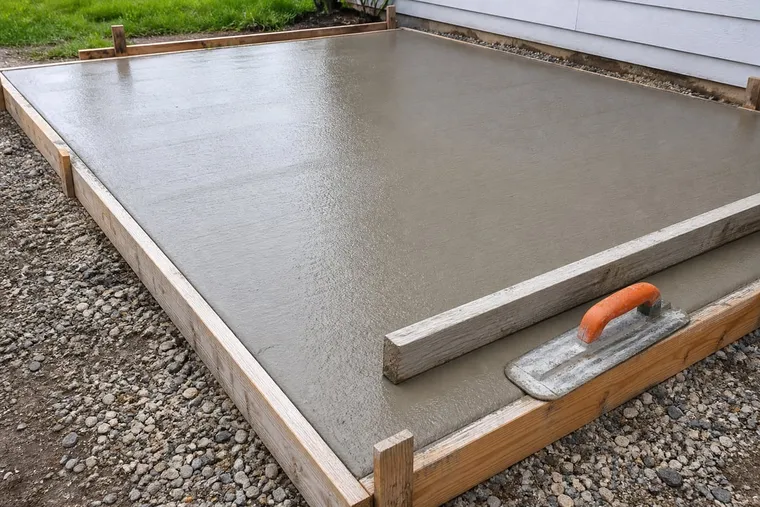
Example estimate ready.Change the measurements and product prices below. Values save only on this device.
Calculation method
How the estimate is built.
Length, width, and thickness determine concrete volume in cubic feet. We apply the buffer, divide by 27 to show ready-mix cubic yards, and round the bag count up using your selected bag yield.
Field notes
Use the estimate well.
Check local requirements for base preparation, reinforcement, frost depth, and permits.
Bagged concrete is practical for small pads and posts; ready-mix is usually better for larger slabs.
FAQ
Concrete questions
How thick should a concrete slab be?
Four inches is a common residential slab thickness, but driveways, hot tubs, footings, and structural work may need different specifications.
Should I order extra concrete?
A 5 to 10 percent buffer is common because subgrade variation and forms can change the real volume.
What is the formula for concrete yardage?
Multiply length by width by thickness in feet to get cubic feet, then divide by 27 to convert cubic feet to cubic yards.
Next projects